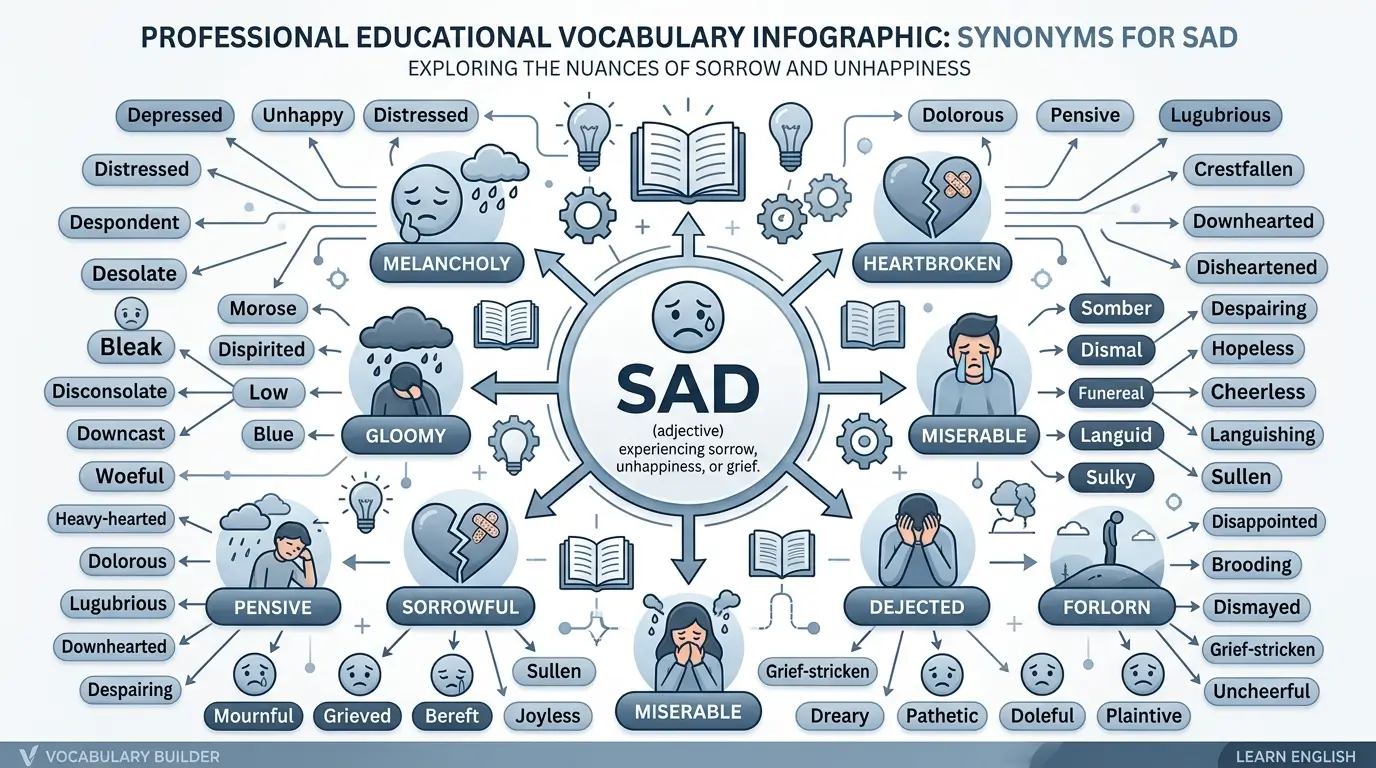
The phrase ‘synonyms for sad list’ refers to a collection of words that can replace the word ‘sad’ in different situations. Learning a list of synonyms for sad helps students, bloggers, content writers, and daily English users express emotions more clearly. A good list of synonyms for sad includes words that show mild disappointment, deep grief, loneliness, or heartbreak.
Imagine writing a story where every character is simply ‘sad’. The writing feels repetitive. Using different words adds emotion, depth, and variety. This guide provides useful alternatives with meanings and examples.
Synonyms for sad list girl
This section explains synonyms for sad list girl in simple English. These words help describe emotions more accurately.
• Useful for writing
• Helpful for speaking
• Improves vocabulary
Sad words with deep meanings
This section explains sad words with deep meanings in simple English. These words help describe emotions more accurately.
• Useful for writing
• Helpful for speaking
• Improves vocabulary
Very sad synonyms
This section explains very sad synonyms in simple English. These words help describe emotions more accurately.
• Useful for writing
• Helpful for speaking
• Improves vocabulary
Synonyms of sad with 4 syllables
This section explains synonyms of sad with 4 syllables in simple English. These words help describe emotions more accurately.
• Useful for writing
• Helpful for speaking
• Improves vocabulary
100 sad words
This section explains 100 sad words in simple English. These words help describe emotions more accurately.
• Useful for writing
• Helpful for speaking
• Improves vocabulary
Synonyms of sad with 3 syllables
This section explains synonyms of sad with 3 syllables in simple English. These words help describe emotions more accurately.
• Useful for writing
• Helpful for speaking
• Improves vocabulary
Another word for sad situation
This section explains another word for sad situation in simple English. These words help describe emotions more accurately.
• Useful for writing
• Helpful for speaking
• Improves vocabulary
Synonyms of sad with 2 syllables
This section explains synonyms of sad with 2 syllables in simple English. These words help describe emotions more accurately.
• Useful for writing
• Helpful for speaking
• Improves vocabulary
Comparison Table
| Keyword | Meaning | Usage Type | Context |
| Synonyms for sad list girl | Related to sadness | Emotional | Writing and conversation |
| Sad words with deep meanings | Related to sadness | Emotional | Writing and conversation |
| Very sad synonyms | Related to sadness | Emotional | Writing and conversation |
| Synonyms of sad with 4 syllables | Related to sadness | Emotional | Writing and conversation |
| 100 sad words | Related to sadness | Emotional | Writing and conversation |
| Synonyms of sad with 3 syllables | Related to sadness | Emotional | Writing and conversation |
| Another word for sad situation | Related to sadness | Emotional | Writing and conversation |
| Synonyms of sad with 2 syllables | Related to sadness | Emotional | Writing and conversation |
1. Unhappy
Meaning: A word used to describe a sad emotional state.
Examples:
1. She felt unhappy after the event.
2. He looked unhappy during the meeting.
2. Gloomy
Meaning: A word used to describe a sad emotional state.
Examples:
1. She felt gloomy after the event.
2. He looked gloomy during the meeting.
3. Miserable
Meaning: A word used to describe a sad emotional state.
Examples:
1. She felt miserable after the event.
2. He looked miserable during the meeting.
4. Heartbroken
Meaning: A word used to describe a sad emotional state.
Examples:
1. She felt heartbroken after the event.
2. He looked heartbroken during the meeting.
5. Downcast
Meaning: A word used to describe a sad emotional state.
Examples:
1. She felt downcast after the event.
2. He looked downcast during the meeting.
6. Depressed
Meaning: A word used to describe a sad emotional state.
Examples:
1. She felt depressed after the event.
2. He looked depressed during the meeting.
7. Melancholy
Meaning: A word used to describe a sad emotional state.
Examples:
1. She felt melancholy after the event.
2. He looked melancholy during the meeting.
8. Sorrowful
Meaning: A word used to describe a sad emotional state.
Examples:
1. She felt sorrowful after the event.
2. He looked sorrowful during the meeting.
9. Blue
Meaning: A word used to describe a sad emotional state.
Examples:
1. She felt blue after the event.
2. He looked blue during the meeting.
10. Dejected
Meaning: A word used to describe a sad emotional state.
Examples:
1. She felt dejected after the event.
2. He looked dejected during the meeting.
11. Disappointed
Meaning: A word used to describe a sad emotional state.
Examples:
1. She felt disappointed after the event.
2. He looked disappointed during the meeting.
12. Grief-stricken
Meaning: A word used to describe a sad emotional state.
Examples:
1. She felt grief-stricken after the event.
2. He looked grief-stricken during the meeting.
13. Forlorn
Meaning: A word used to describe a sad emotional state.
Examples:
1. She felt forlorn after the event.
2. He looked forlorn during the meeting.
14. Despairing
Meaning: A word used to describe a sad emotional state.
Examples:
1. She felt despairing after the event.
2. He looked despairing during the meeting.
15. Woeful
Meaning: A word used to describe a sad emotional state.
Examples:
1. She felt woeful after the event.
2. He looked woeful during the meeting.
16. Mournful
Meaning: A word used to describe a sad emotional state.
Examples:
1. She felt mournful after the event.
2. He looked mournful during the meeting.
17. Somber
Meaning: A word used to describe a sad emotional state.
Examples:
1. She felt somber after the event.
2. He looked somber during the meeting.
18. Low
Meaning: A word used to describe a sad emotional state.
Examples:
1. She felt low after the event.
2. He looked low during the meeting.
19. Hopeless
Meaning: A word used to describe a sad emotional state.
Examples:
1. She felt hopeless after the event.
2. He looked hopeless during the meeting.
20. Distressed
Meaning: A word used to describe a sad emotional state.
Examples:
1. She felt distressed after the event.
2. He looked distressed during the meeting.
21. Troubled
Meaning: A word used to describe a sad emotional state.
Examples:
1. She felt troubled after the event.
2. He looked troubled during the meeting.
22. Hurt
Meaning: A word used to describe a sad emotional state.
Examples:
1. She felt hurt after the event.
2. He looked hurt during the meeting.
23. Broken
Meaning: A word used to describe a sad emotional state.
Examples:
1. She felt broken after the event.
2. He looked broken during the meeting.
24. Lonely
Meaning: A word used to describe a sad emotional state.
Examples:
1. She felt lonely after the event.
2. He looked lonely during the meeting.
25. Regretful
Meaning: A word used to describe a sad emotional state.
Examples:
1. She felt regretful after the event.
2. He looked regretful during the meeting.
26. Dismal
Meaning: A word used to describe a sad emotional state.
Examples:
1. She felt dismal after the event.
2. He looked dismal during the meeting.
27. Glum
Meaning: A word used to describe a sad emotional state.
Examples:
1. She felt glum after the event.
2. He looked glum during the meeting.
28. Crestfallen
Meaning: A word used to describe a sad emotional state.
Examples:
1. She felt crestfallen after the event.
2. He looked crestfallen during the meeting.
29. Anguished
Meaning: A word used to describe a sad emotional state.
Examples:
1. She felt anguished after the event.
2. He looked anguished during the meeting.
30. Pained
Meaning: A word used to describe a sad emotional state.
Examples:
1. She felt pained after the event.
2. He looked pained during the meeting.
31. Heavyhearted
Meaning: A word used to describe a sad emotional state.
Examples:
1. She felt heavyhearted after the event.
2. He looked heavyhearted during the meeting.
32. Disheartened
Meaning: A word used to describe a sad emotional state.
Examples:
1. She felt disheartened after the event.
2. He looked disheartened during the meeting.
33. Wretched
Meaning: A word used to describe a sad emotional state.
Examples:
1. She felt wretched after the event.
2. He looked wretched during the meeting.
34. Morose
Meaning: A word used to describe a sad emotional state.
Examples:
1. She felt morose after the event.
2. He looked morose during the meeting.
35. Lugubrious
Meaning: A word used to describe a sad emotional state.
Examples:
1. She felt lugubrious after the event.
2. He looked lugubrious during the meeting.
36. Doleful
Meaning: A word used to describe a sad emotional state.
Examples:
1. She felt doleful after the event.
2. He looked doleful during the meeting.
37. Woebegone
Meaning: A word used to describe a sad emotional state.
Examples:
1. She felt woebegone after the event.
2. He looked woebegone during the meeting.
38. Desolate
Meaning: A word used to describe a sad emotional state.
Examples:
1. She felt desolate after the event.
2. He looked desolate during the meeting.
39. Bereaved
Meaning: A word used to describe a sad emotional state.
Examples:
1. She felt bereaved after the event.
2. He looked bereaved during the meeting.
40. Sullen
Meaning: A word used to describe a sad emotional state.
Examples:
1. She felt sullen after the event.
2. He looked sullen during the meeting.
41. Remorseful
Meaning: A word used to describe a sad emotional state.
Examples:
1. She felt remorseful after the event.
2. He looked remorseful during the meeting.
42. Tearful
Meaning: A word used to describe a sad emotional state.
Examples:
1. She felt tearful after the event.
2. He looked tearful during the meeting.
43. Dreary
Meaning: A word used to describe a sad emotional state.
Examples:
1. She felt dreary after the event.
2. He looked dreary during the meeting.
44. Downhearted
Meaning: A word used to describe a sad emotional state.
Examples:
1. She felt downhearted after the event.
2. He looked downhearted during the meeting.
45. Aggrieved
Meaning: A word used to describe a sad emotional state.
Examples:
1. She felt aggrieved after the event.
2. He looked aggrieved during the meeting.
46. Lamenting
Meaning: A word used to describe a sad emotional state.
Examples:
1. She felt lamenting after the event.
2. He looked lamenting during the meeting.
47. Mopey
Meaning: A word used to describe a sad emotional state.
Examples:
1. She felt mopey after the event.
2. He looked mopey during the meeting.
48. Spiritless
Meaning: A word used to describe a sad emotional state.
Examples:
1. She felt spiritless after the event.
2. He looked spiritless during the meeting.
49. Joyless
Meaning: A word used to describe a sad emotional state.
Examples:
1. She felt joyless after the event.
2. He looked joyless during the meeting.
50. Blue-hearted
Meaning: A word used to describe a sad emotional state.
Examples:
1. She felt blue-hearted after the event.
2. He looked blue-hearted during the meeting.
Conclusion
Learning synonyms improves writing, blogging, speaking, and communication. Using a wide range of emotional vocabulary makes emails, essays, and daily conversations more engaging and precise.

Daniel Parker is an English language researcher and editor at Prayerifi.com. He enjoys exploring word differences, vocabulary trends, and language usage. Through detailed yet simple articles, he helps readers understand complex language concepts with ease.